
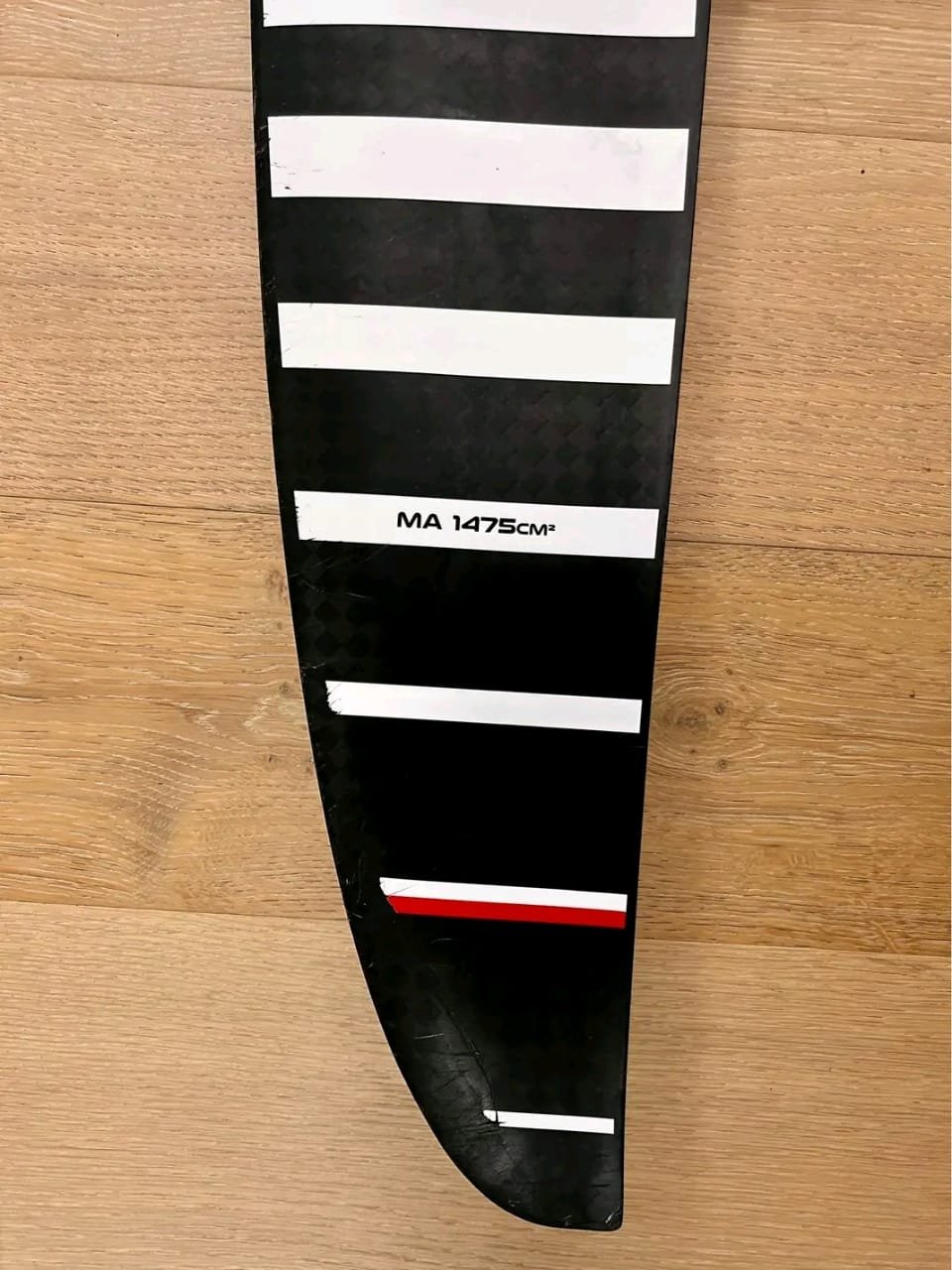


AMSTRONG MA 1475
€400.00
Description
Armstrong MA 1475 – High-Aspect Glide, Precision Carving, and Downwind Efficiency
Speed reshapes expectations. Glide transforms every bump into opportunity. Precision engineering unlocks next-level flow. The AMSTRONG MA 1475 (Armstrong Mid Aspect 1475) delivers refined lift, extended glide, and carving control for riders who want efficient performance across wing foiling, prone, SUP, and downwind disciplines
Built within Armstrong’s performance-driven foil ecosystem, the AMSTRONG MA 1475 balances high-aspect efficiency with accessible handling. Consequently, riders experience earlier lift, longer connections between swells, and confident rail-to-rail transitions. Whether you chase downwind lines or refine powered wing sessions, this foil brings measurable performance gains.
Why Choose the AMSTRONG MA 1475?
Versatility accelerates progression. Efficiency reduces fatigue. Stability builds confidence. The AMSTRONG MA 1475 integrates aerodynamic refinement with structural rigidity to create a foil that supports both intermediate advancement and advanced expression.
Key Performance Highlights
High-aspect glide for extended runs
Early lift with efficient pump return
Predictable carving response
Stable pitch control at speed
Reduced drag profile for downwind flow
Lightweight carbon construction
Cross-discipline adaptability
Strong resale retention within Armstrong ecosystem
Moreover, optimized foil section geometry ensures sustained lift without abrupt stall characteristics.
Design Philosophy Behind the AMSTRONG MA 1475
Every dimension influences ride feel. Span determines glide efficiency. Chord distribution impacts lift curve stability. Foil section camber defines pump return.
The AMSTRONG MA 1475 leverages mid-to-high aspect geometry to deliver:
Increased lift-to-drag ratio
Improved forward projection
Stable low-speed flight
Balanced roll response
As a result, riders connect bumps with less energy expenditure.
Technical Specifications – AMSTRONG MA 1475
Model: AMSTRONG MA 1475
Surface Area: 1475 cm²
Aspect Ratio: Mid-to-High Aspect Performance
Construction: Full Carbon Composite
Recommended Disciplines: Wing Foil, Downwind, Prone, SUP Foil
Skill Level: Intermediate to Advanced
Additionally, Armstrong’s precision manufacturing process maintains tight tolerances across the entire foil structure.
Glide Efficiency & Downwind Capability
Glide defines momentum. Momentum creates flow.
The AMSTRONG MA 1475 excels in downwind scenarios due to its refined span and foil section. Consequently, riders sustain forward projection between bumps with minimal drag resistance.
Downwind Advantages
Extended glide phases
Reduced stall risk
Efficient pump-to-glide transitions
Smooth swell linking
Because hydrodynamic efficiency improves, endurance sessions become more achievable.
Pump Performance & Energy Transfer
Pumping efficiency determines return speed to swell connection.
The AMSTRONG MA 1475 features carbon stiffness optimized for energy transfer. Therefore:
Vertical input converts directly into lift
Flex-induced energy loss minimizes
Rhythm consistency improves
Fatigue decreases during extended sessions
As a result, riders maximize time on foil.
Carving Dynamics & Rail-to-Rail Control
High-aspect foils sometimes sacrifice maneuverability. However, the AMSTRONG MA 1475 preserves carving precision while maintaining glide efficiency.
Carving Characteristics
Progressive roll response
Stable pitch during direction changes
Predictable rail engagement
Smooth transition arcs
Consequently, carving remains intuitive rather than technical.
Wing Foiling Performance
Powered wing sessions demand balance between lift and control.
The AMSTRONG MA 1475 delivers early takeoff combined with stable forward drive. Therefore, riders maintain flight in variable wind conditions.
Wing Foil Benefits
Earlier lift threshold
Strong upwind drive
Consistent glide in lulls
Controlled speed at higher wind
Because lift builds progressively, transitions feel smooth.
Prone & SUP Foil Adaptability
Wave riders appreciate efficiency.
The AMSTRONG MA 1475 supports small-to-medium wave linking due to sustained glide characteristics. Consequently, riders pump efficiently between sections.
Moreover, predictable pitch stability enhances confidence on steeper drops.
Rider Weight Optimization Guide
Selecting appropriate surface area ensures optimal lift balance.
Rider Weight Performance Expectation
60–75 kg Early lift, strong glide
75–90 kg Balanced efficiency and carving
90–105 kg Stable lift in lighter wind
105+ kg Reliable downwind support
Stabilizer pairing further refines pitch control.
Structural Integrity & Carbon Construction
Performance relies on stiffness. Durability ensures longevity.
The AMSTRONG MA 1475 utilizes high-modulus carbon layering to maximize torsional rigidity. Consequently:
Pump efficiency increases
Structural flex reduces
Long-term durability improves
Weight remains optimized
Additionally, Armstrong’s manufacturing consistency ensures alignment precision.
Compatibility & Ecosystem Integration
Armstrong components integrate seamlessly within their modular system.
Before purchase, confirm:
Mast compatibility
Fuselage length selection
Stabilizer pairing preference
Proper alignment optimizes structural integrity and ride feel.
Inclusive Performance Philosophy
Performance gear should support diverse riders.
Lighter athletes benefit from efficient lift at lower speeds. Heavier riders leverage increased surface area for stability. Riders transitioning from lower aspect foils gain accessible glide without losing maneuverability.
Because inclusive design enhances control and comfort, broader progression becomes achievable.
Environmental Responsibility
Extending product lifespan reduces environmental impact.
Carbon durability combined with Armstrong’s ecosystem compatibility supports sustainable gear rotation. Consequently, riders reduce unnecessary replacement cycles.
Competitive Positioning of the AMSTRONG MA 1475
Compared to lower aspect foils, the AMSTRONG MA 1475 offers:
Improved glide ratio
Greater pump efficiency
Higher sustained speed
Enhanced downwind performance
Compared to ultra-high aspect race foils, it maintains better carving accessibility.
Therefore, it occupies a versatile performance category.
Highlight Features for Product Listing
High-aspect 1475 cm² front wing
Efficient glide for downwind sessions
Strong carbon construction
Early lift capability
Smooth carving dynamics
Stable pitch control
Cross-discipline adaptability
Lightweight and durable design
Modular Armstrong compatibility
Performance-driven geometry
Advanced Setup Recommendations
Fine-tuning enhances performance output.
Mast Selection
Stiffer carbon masts improve torsional precision.
Stabilizer Choice
Smaller stabilizers increase agility. Larger stabilizers enhance pitch stability.
Fuselage Length
Mid-length fuselages balance maneuverability and stability.
Small setup changes influence overall performance significantly.
Rider Progression Pathways
Intermediate Riders
Gain earlier lift and smoother glide transitions. Develop efficient pump timing.
Advanced Riders
Maximize downwind projection. Refine carving lines at speed.
Progression becomes measurable through improved endurance and flow.
Long-Term Value & Investment Perspective
Premium foils maintain structural integrity when cared for properly. Therefore:
Resale value remains strong
Cost per session decreases
Performance consistency sustains
Investment aligns with performance longevity.
Final Performance Summary – AMSTRONG MA 1475
Efficiency drives endurance. Precision refines carving. Glide transforms connection between swells.
The AMSTRONG MA 1475 combines high-aspect glide efficiency with controlled maneuverability, delivering sustained lift, pump efficiency, and downwind capability across disciplines. Riders gain measurable endurance, smoother transitions, and expanded session potential.
For those seeking a versatile high-aspect foil that balances speed, stability, and carving precision, the AMSTRONG MA 1475 stands as a strategic upgrade engineered for flow, progression, and long-term performance evolution.
AMSTRONG MA 1475 – Advanced Hydrodynamics, Pump Efficiency & Setup Optimization
Momentum fuels progression. Hydrodynamic efficiency sustains glide. Structural precision transforms every pump into forward projection. The AMSTRONG MA 1475 continues to demonstrate why mid-to-high aspect foil design remains the benchmark for riders seeking balance between speed, lift stability, and carving control.
This section explores deeper performance engineering, including lift curve behavior, pitch stability dynamics, pump cycle efficiency, downwind bump connection strategy, and advanced setup pairing — all centered around maximizing the performance of the AMSTRONG MA 1475.
Lift Curve Behavior & Low-Speed Efficiency
Lift generation determines takeoff threshold. Lift stability determines ride quality.
The AMSTRONG MA 1475 delivers progressive lift rather than abrupt elevation spikes. Consequently, riders experience smoother takeoffs and predictable acceleration phases.
Lift Characteristics Include:
-
Early rise onto foil
-
Wide usable speed range
-
Stable mid-speed cruising
-
Reduced sudden stall behavior
Because camber distribution remains balanced across the span, lift builds evenly along the wing surface.
Moreover, consistent lift across lower speeds enhances light-wind and smaller swell sessions.
Pump Cycle Efficiency & Energy Transfer
Efficient pumping converts vertical input into forward projection. Structural stiffness amplifies that conversion.
The AMSTRONG MA 1475 integrates high-modulus carbon layering to preserve rigidity under load. As a result:
-
Energy loss through flex minimizes
-
Forward glide after each pump increases
-
Pump rhythm consistency improves
-
Rider fatigue reduces
Pump Optimization Benefits
-
Longer glide intervals
-
Fewer pump repetitions required
-
Improved bump reconnection
-
Enhanced endurance in downwind sessions
Consequently, riders maintain speed with less effort.
Pitch Stability & Speed Control
Pitch stability influences confidence at speed.
The AMSTRONG MA 1475 maintains controlled nose behavior across a broad velocity range. Therefore, riders feel supported rather than reactive during acceleration.
Pitch Performance Advantages
-
Stable front-to-back balance
-
Predictable acceleration curve
-
Controlled deceleration during turns
-
Reduced oscillation at higher speeds
Because the foil resists sudden pitch surges, carving lines feel composed.
Downwind Connection Strategy
Downwind riding rewards glide continuity.
The AMSTRONG MA 1475 excels in linking bumps due to its lift-to-drag efficiency ratio. Consequently, riders transition between swells with reduced pumping demand.
Downwind Flow Benefits
-
Extended glide projection
-
Smooth swell entry
-
Controlled descent into troughs
-
Efficient re-acceleration
Moreover, reduced induced drag supports sustained momentum between wave faces.
Carving & Roll Transition Dynamics
High-aspect foils sometimes challenge turning agility. However, the AMSTRONG MA 1475 balances span efficiency with roll accessibility.
Carving Characteristics
-
Progressive rail engagement
-
Controlled lean initiation
-
Balanced roll resistance
-
Clean exit acceleration
Because roll response remains predictable, riders maintain smooth carve arcs without overcorrection.
Wing Foil Power Management
Wing foiling requires lift control during gust variation.
The AMSTRONG MA 1475 maintains stable forward drive under fluctuating wind loads. Consequently, riders retain composure during transitions from powered gusts to lighter lulls.
Wing Foil Stability Benefits
-
Efficient upwind tracking
-
Smooth speed scaling
-
Reduced front-foot overload
-
Balanced glide during wind drops
Therefore, sessions remain productive even in variable conditions.
Rider Weight & Performance Scaling
Surface area must align with rider weight for optimal efficiency.
| Rider Weight | Performance Scaling Outcome |
|---|---|
| 60–75 kg | Early lift, responsive carving |
| 75–90 kg | Balanced glide and control |
| 90–105 kg | Stable light-wind efficiency |
| 105+ kg | Reliable downwind lift support |
Stabilizer size adjustments further refine pitch behavior.
Advanced Setup Configuration
Fine-tuning unlocks peak performance.
Mast Selection
Higher stiffness masts enhance torsional precision. Consequently, carving response sharpens.
Stabilizer Pairing
-
Smaller stabilizer: increased agility
-
Larger stabilizer: improved pitch stability
Fuselage Length
Mid-length fuselages balance maneuverability and forward projection. Shorter fuselages increase responsiveness but demand refined control.
Setup synergy directly influences overall performance output.
Speed Envelope & Glide Retention
Speed retention defines glide quality.
The AMSTRONG MA 1475 sustains efficient forward projection across moderate-to-high speeds. Therefore, riders maintain energy between pump cycles and directional changes.
Speed Envelope Benefits
-
Smooth acceleration curve
-
Reduced drag at cruising speed
-
Controlled high-speed behavior
-
Predictable deceleration when needed
Because drag coefficients remain optimized, efficiency improves.
Structural Durability & Longevity
Performance requires durability.
Armstrong’s carbon construction resists torsional fatigue under repetitive pump stress. Consequently, long-term stiffness retention remains consistent.
Structural Advantages
-
Reinforced carbon layering
-
Precision bonding alignment
-
Resistance to microfracture stress
-
Corrosion-resistant hardware integration
Proper care extends lifespan and protects structural performance.
Inclusive Performance & Rider Accessibility
Performance should empower diverse riders.
Lighter athletes benefit from early lift characteristics. Heavier riders leverage increased surface area for stability. Riders transitioning from lower aspect foils gain glide improvements without sacrificing maneuverability.
Because inclusive design supports varied progression paths, the AMSTRONG MA 1475 remains accessible across disciplines.
Environmental Sustainability & Ecosystem Efficiency
Long-lasting gear reduces replacement frequency.
Armstrong’s modular ecosystem allows riders to upgrade components without replacing entire systems. Consequently, material waste decreases.
Durability combined with compatibility enhances long-term sustainability.
Competitive Landscape Positioning
Compared to low-aspect surf-focused foils, the AMSTRONG MA 1475 delivers:
-
Higher glide efficiency
-
Stronger pump return
-
Improved sustained speed
-
Greater downwind reach
Compared to ultra-high-aspect race foils, it maintains:
-
More accessible carving
-
Improved pitch forgiveness
-
Better cross-discipline versatility
Therefore, it occupies a balanced performance category.
Highlight Product Features – AMSTRONG MA 1475
-
1475 cm² high-aspect front wing
-
Efficient lift-to-drag ratio
-
Carbon composite construction
-
Early lift for light wind
-
Extended glide for downwind sessions
-
Stable pitch control
-
Progressive carving response
-
Modular compatibility within Armstrong system
-
Durable precision engineering
-
Strong resale retention
Hydrodynamic balance enhances endurance. Structural rigidity sharpens control. Efficient glide transforms connection between swells.
The AMSTRONG MA 1475 continues to deliver measurable improvements in pump efficiency, downwind flow, carving precision, and cross-discipline adaptability. Riders gain extended glide intervals, smoother pitch stability, and reduced fatigue across longer sessions.
For athletes seeking refined high-aspect efficiency without sacrificing maneuverability, the AMSTRONG MA 1475 stands as a strategic foil investment designed for progression, sustainability, and performance longevity.




Reviews
There are no reviews yet.