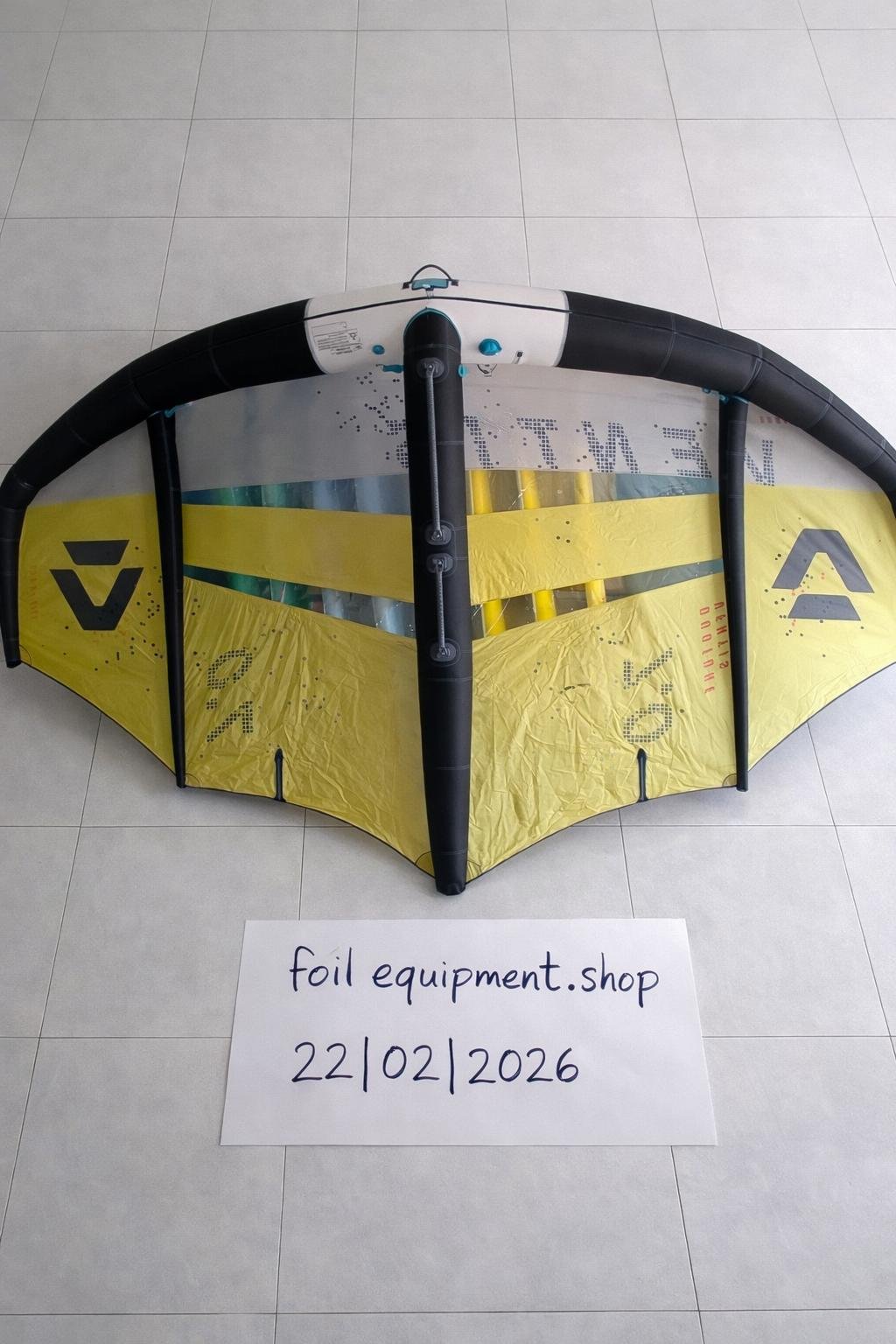
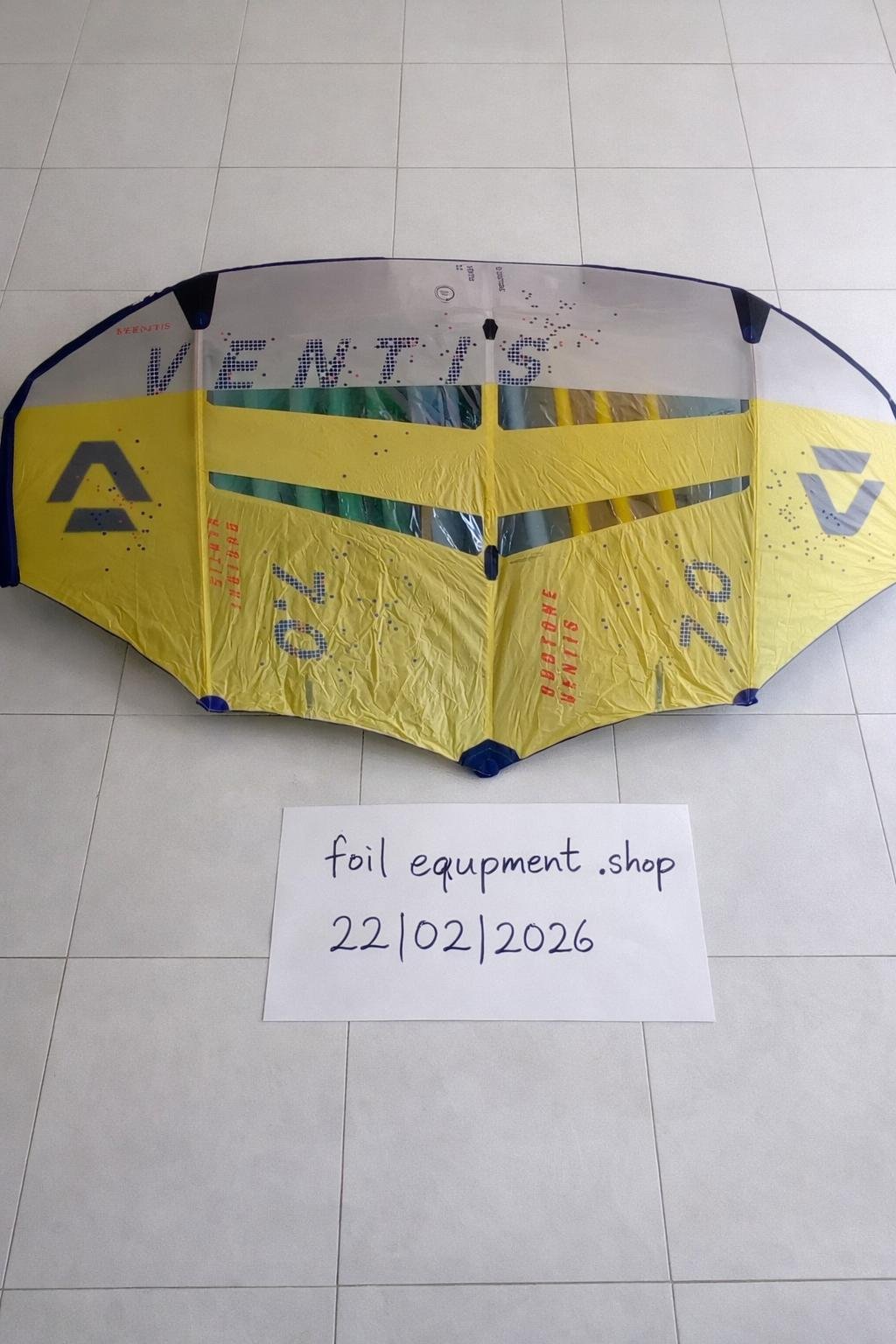
Duotone Ventis 7.0
€500.00
Description
Duotone Ventis 7.0 – Maximum Lightwind Power, Early Lift & Confident Control
Light wind no longer limits progression. Bigger wings now feel lighter in hand. Efficient power delivery transforms marginal sessions into full-performance days. The Duotone Ventis 7.0 stands at the forefront of lightwind wing foiling innovation, engineered to deliver earlier takeoff, stable drive, and surprisingly agile handling for its size category
Purpose-built for riders who refuse to wait on stronger forecasts, the Duotone Ventis 7.0 unlocks performance in sub-powered conditions while maintaining precise control as wind builds. Whether you’re refining your first lightwind flights or maximizing glide efficiency with larger foils, this wing expands your usable wind range dramatically.
Why Choose the Duotone Ventis 7.0?
Marginal wind demands intelligent design. Large surface area requires structural balance. Lightweight handling defines session endurance. The Duotone Ventis 7.0 integrates optimized canopy tension, refined frame stiffness, and weight-conscious construction to produce impressive low-end power without sacrificing maneuverability.
Key Performance Highlights
-
Exceptional early lift in light wind
-
Optimized power-to-weight ratio
-
Stable canopy profile under load
-
Smooth pumping acceleration
-
Efficient upwind tracking
-
Reduced arm fatigue for extended sessions
-
Balanced drift during transitions
-
Inclusive performance for varied rider weights
Moreover, its tuned dihedral and span geometry enhance stability while preserving responsive steering.
Duotone Ventis 7.0 – Technical Overview
Every dimension of the Duotone Ventis 7.0 targets efficient power generation in lightwind conditions.
Core Specifications:
-
Model: Duotone Ventis 7.0
-
Size: 7.0 m²
-
Discipline: Lightwind Wing Foiling
-
Wind Range: Approx. 8–18 knots (rider dependent)
-
Construction: Lightweight frame & tension-optimized canopy
-
Skill Level: Beginner to Advanced
Additionally, optimized strut placement enhances structural integrity without adding unnecessary weight.
Lightwind Performance & Early Takeoff
Low wind requires refined power efficiency.
The Duotone Ventis 7.0 delivers powerful yet manageable low-end torque. Consequently, riders achieve foil lift earlier with fewer pump cycles.
Early Lift Advantages
-
Reduced pumping effort
-
Faster acceleration to takeoff speed
-
Improved water-start confidence
-
Greater session consistency in marginal conditions
Because power builds progressively, riders maintain balance during lift-off.
Pumping Efficiency & Acceleration
Wing pumping influences foil engagement.
The Duotone Ventis 7.0 responds dynamically during pump sequences. As a result:
-
Power engages smoothly
-
Forward drive increases efficiently
-
Energy transfer feels direct
-
Rider fatigue decreases
Additionally, refined canopy tension reduces flutter during repetitive pumping cycles.
Stability & Gust Control
Large wings must remain stable across wind shifts.
The Duotone Ventis 7.0 maintains canopy shape integrity under both lulls and gusts. Therefore, power delivery remains predictable.
Stability Benefits
-
Reduced canopy oscillation
-
Controlled pull during gust spikes
-
Balanced drift during transitions
-
Stable overhead positioning
Because frame rigidity increases load tolerance, riders experience consistent control.
Upwind Performance & Glide Retention
Efficient upwind drive extends session range.
The Duotone Ventis 7.0 tracks efficiently against the wind due to its optimized profile and tension distribution. Consequently, riders return to peak zones faster after each run.
Moreover, sustained forward projection enhances glide connection when paired with larger foils.
Handling & Maneuverability
Despite its 7.0 m² size, the Duotone Ventis 7.0 maintains responsive handling characteristics.
Handling Characteristics
-
Balanced dihedral for stability
-
Predictable steering response
-
Smooth wing rotations
-
Comfortable neutral drift
Because weight distribution remains optimized, arm fatigue reduces during long sessions.
Rider Weight Optimization
Matching wing size to rider weight improves efficiency.
| Rider Weight | Lightwind Performance |
|---|---|
| 60–75 kg | Ultra-early lift, strong glide |
| 75–90 kg | Balanced power and control |
| 90–105 kg | Reliable takeoff in marginal wind |
| 105+ kg | Stable low-end support with larger foil |
Board size and foil surface area influence final performance.
Inclusive Design Philosophy
Wing foiling thrives when access expands across skill levels and body types.
Lighter riders appreciate the manageable bar pressure equivalent in wing handling. Heavier riders benefit from consistent low-end torque. Beginners gain earlier lift confidence. Advanced riders exploit glide efficiency for extended downwind runs.
Because inclusive design promotes comfort and control, more riders progress successfully.
Construction & Durability
Lightweight does not mean fragile.
The Duotone Ventis 7.0 integrates reinforced seams and optimized frame materials to balance durability with weight efficiency.
Construction Highlights
-
Reinforced leading edge segments
-
Optimized canopy panel alignment
-
Durable window integration
-
High-tension stitching zones
Proper rinsing and storage extend lifespan significantly.
Performance Comparison
Compared to smaller 5.0–6.0 m² wings, the Duotone Ventis 7.0 offers:
-
Earlier lift threshold
-
Increased low-end torque
-
Reduced pumping demand
-
Greater glide sustain
Compared to oversized heavy lightwind wings, it maintains:
-
Improved handling balance
-
Reduced fatigue
-
More controlled gust response
Therefore, it occupies an efficient lightwind performance category.
Setup & Pairing Recommendations
Optimized pairing enhances results.
Foil Pairing
Large surface area foils amplify early lift synergy.
Board Volume
Higher volume boards improve lightwind takeoff stability.
Mast Height
Longer masts enhance swell connection range once on foil.
Small adjustments influence overall performance significantly.
Environmental & Long-Term Value
Durable construction reduces replacement frequency. Extended session capability maximizes investment value.
Additionally, high-demand lightwind wings often maintain strong resale potential.
Highlight Features – Duotone Ventis 7.0
-
7.0 m² optimized lightwind wing
-
Exceptional early lift
-
Stable canopy in marginal wind
-
Efficient pumping acceleration
-
Balanced drift characteristics
-
Reduced arm fatigue
-
Durable reinforced construction
-
Inclusive rider adaptability
-
Strong upwind tracking
-
High-value long-term performance
Real-World Session Scenarios
Marginal Wind Morning
Wind reads 9 knots. Riders pump lightly. The Duotone Ventis 7.0 delivers lift before others launch.
Variable Afternoon Breeze
Wind shifts between 10–16 knots. Stable canopy profile maintains composure. Transitions remain controlled.
Lightwind Downwind Run
Extended glide pairs with efficient foil pumping. Session length increases.
Duotone Ventis 7.0
Lightwind potential transforms when engineering prioritizes efficiency. Early lift builds confidence. Stable power enhances progression.
The Duotone Ventis 7.0 delivers exceptional low-end torque, controlled stability, and surprisingly agile handling in a 7.0 m² lightwind platform. Riders gain extended session time, smoother takeoffs, and reliable power management across marginal conditions.
For those seeking to maximize water time without waiting for stronger forecasts, the Duotone Ventis 7.0 stands as a strategic performance investment designed to expand wind range, refine technique, and elevate lightwind wing foiling progression.
Duotone Ventis 7.0 – Advanced Lightwind Engineering, Control Scaling & Setup Optimization
Marginal forecasts demand smarter equipment choices. Efficient power delivery determines whether a session launches or stalls. Balanced structure defines whether large wings feel heavy or responsive. The Duotone Ventis 7.0 continues to redefine what riders expect from a dedicated lightwind platform by combining optimized canopy tension, refined span geometry, and weight-conscious frame engineering.
This section expands into aerodynamic load management, pumping biomechanics, gust absorption strategy, foil pairing synergy, and long-range session efficiency — all reinforcing why the Duotone Ventis 7.0 dominates lightwind performance categories.
Aerodynamic Load Distribution in Large Surface Wings
Large wings must manage pressure gradients carefully.
The Duotone Ventis 7.0 distributes aerodynamic load evenly across its canopy profile. Consequently, pressure points reduce and structural distortion remains controlled.
Load Management Advantages
-
Reduced canopy flutter
-
Stable draft positioning
-
Balanced pull distribution
-
Controlled trailing edge tension
Because load remains evenly spread, power delivery feels smooth rather than abrupt.
Pump Biomechanics & Rider Efficiency
Efficient pumping transforms marginal wind into lift.
The Duotone Ventis 7.0 converts rider input into forward projection through optimized canopy rebound characteristics. Therefore, pump cycles generate measurable acceleration rather than wasted motion.
Pump Performance Benefits
-
Progressive power build
-
Reduced arm fatigue
-
Strong forward drive during pump phase
-
Faster engagement of foil lift
Additionally, lighter frame components reduce inertia during repeated wing oscillation.
Gust Absorption & Wind Variability Control
Lightwind sessions rarely stay consistent.
The Duotone Ventis 7.0 absorbs gust spikes without destabilizing rider stance. Consequently, riders maintain control when wind increases unexpectedly.
Stability Characteristics
-
Controlled power surge response
-
Minimal canopy over-flex
-
Predictable depower release
-
Stable overhead positioning during transitions
Because structural tension remains optimized, performance stays composed across fluctuating conditions.
Glide Retention & Foil Synergy
Wing efficiency multiplies when paired correctly.
The Duotone Ventis 7.0 performs exceptionally with mid-to-large surface area foils. Consequently, early lift synergy improves dramatically.
Ideal Foil Pairing
-
High-aspect foils for extended glide
-
Mid-aspect foils for carving versatility
-
Larger front wings for ultra-light conditions
Proper foil pairing enhances pump return and glide retention.
Upwind Efficiency & Session Productivity
Lightwind riders benefit from strong upwind capability.
The Duotone Ventis 7.0 tracks efficiently due to balanced canopy camber and stable dihedral geometry. As a result, riders regain upwind ground quickly between runs.
Upwind Benefits
-
Increased return speed
-
Reduced leg fatigue
-
Improved session flow
-
More frequent downwind opportunities
Efficiency extends productive session time.
Handling Balance in Oversized Wings
Large wings often feel cumbersome.
However, the Duotone Ventis 7.0 maintains balanced rotational control through refined weight distribution. Therefore, transitions feel controlled rather than sluggish.
Handling Characteristics
-
Smooth jibe rotations
-
Controlled tacks
-
Balanced neutral drift
-
Predictable wing tip recovery
Because inertia reduces, rider movements feel lighter.
Rider Weight Scaling & Performance Output
Wing size interacts directly with rider mass.
| Rider Weight | Performance Outcome |
|---|---|
| 60–75 kg | Extremely early lift and efficient glide |
| 75–90 kg | Balanced lightwind power |
| 90–105 kg | Strong takeoff support in 8–12 knots |
| 105+ kg | Reliable lift with appropriate foil pairing |
Board volume and foil size influence final results.
Structural Integrity & Long-Term Durability
Lightweight construction requires reinforcement precision.
The Duotone Ventis 7.0 integrates strengthened leading edge segments and reinforced seam alignment. Consequently, structural consistency sustains across seasons.
Durability Features
-
Reinforced high-stress stitching
-
Optimized canopy tension panels
-
Durable window placement
-
Stable frame architecture
Proper drying and storage further extend lifespan.
Wind Range Expansion Strategy
The Duotone Ventis 7.0 extends usable wind range downward significantly.
Typical Wind Envelope
-
8–12 knots: Early lift focus
-
12–15 knots: Efficient glide cruising
-
15–18 knots: Controlled powered lightwind performance
Beyond that range, riders may shift to smaller wings.
Because power delivery scales progressively, adaptation remains smooth.
Inclusive Rider Accessibility
Lightwind equipment often excludes heavier riders.
However, the Duotone Ventis 7.0 supports a wide weight spectrum due to its refined low-end torque and balanced handling. Consequently, both lighter and heavier riders experience improved accessibility to marginal sessions.
Beginners benefit from stable lift characteristics. Advanced riders maximize glide efficiency.
Competitive Landscape Positioning
Compared to standard 6.0 m² wings, the Duotone Ventis 7.0 offers:
-
Lower takeoff threshold
-
Increased forward projection
-
Reduced pump demand
-
Greater stability in lulls
Compared to oversized heavy-duty lightwind wings, it maintains:
-
Better handling balance
-
Lower fatigue output
-
More refined gust control
Therefore, it occupies a premium lightwind performance category.
Highlight Features – Duotone Ventis 7.0
-
Optimized 7.0 m² lightwind platform
-
Exceptional early lift threshold
-
Efficient pump-to-glide acceleration
-
Stable canopy under gust variation
-
Balanced handling despite large span
-
Strong upwind efficiency
-
Durable reinforced construction
-
Compatible with large and mid-aspect foils
-
Inclusive performance for diverse riders
-
Long-term resale potential
Advanced Setup Considerations
Fine-tuning enhances performance output.
Harness Line Adjustment
Correct placement reduces arm fatigue during extended cruising.
Inflation Pressure
Proper PSI ensures frame rigidity and canopy stability.
Foil Positioning
Slight mast track adjustments influence takeoff timing.
Small refinements significantly affect ride quality.
Duotone Ventis 7.0 – High-Efficiency Glide Strategy, Advanced Control & Long-Term Ownership
Momentum in light wind requires intention. Efficiency determines elevation. Stability builds confidence when conditions fluctuate. The Duotone Ventis 7.0 continues to prove that large-surface wings can deliver powerful low-end torque without sacrificing balance, control, or long-session comfort.
This final section explores high-efficiency glide strategy, advanced riding techniques, structural longevity, discipline crossover potential, and long-term value — all reinforcing why the Duotone Ventis 7.0 stands at the top of the dedicated lightwind category.
Glide Strategy & Energy Conservation
Lightwind riding rewards efficiency over aggression.
The Duotone Ventis 7.0 generates sustained forward drive once on foil. Consequently, riders maintain flight through lulls without excessive pumping.
Glide Optimization Benefits
-
Longer neutral glide phases
-
Reduced cadence pumping
-
Smoother wind transitions
-
Extended downwind travel
Because the canopy holds its draft position consistently, power remains stable even when wind softens.
Advanced Lightwind Technique Integration
Refined technique amplifies performance.
Progressive Pump Sequence
Instead of rapid oscillations, controlled pump timing increases projection efficiency with the Duotone Ventis 7.0.
Foil Engagement Timing
Matching pump rhythm with foil lift curve improves takeoff consistency.
Wind Pocket Positioning
Strategic positioning within micro-gust zones maximizes low-end torque output.
As technique evolves, session productivity increases noticeably.
Control Scaling as Wind Builds
Lightwind sessions often intensify mid-session.
The Duotone Ventis 7.0 scales predictably as wind increases toward the upper range. Therefore, riders maintain control without immediate downsizing.
Power Scaling Characteristics
-
Linear power build
-
Controlled depower range
-
Stable canopy geometry under load
-
Balanced forward pull
Because gust absorption remains refined, rider stance stays composed.
Jibe & Tack Stability in Larger Wings
Transitions define flow.
Despite its 7.0 m² surface area, the Duotone Ventis 7.0 maintains rotational stability during jibes and tacks. Consequently, riders execute smoother transitions without wing tip drop.
Transition Benefits
-
Balanced overhead drift
-
Reduced wing inertia during rotation
-
Predictable tip clearance
-
Smooth re-engagement after turn
Weight distribution refinement minimizes awkward handling.
Endurance Sessions & Fatigue Reduction
Large wings traditionally increase fatigue.
However, optimized frame tension and reduced unnecessary material weight allow the Duotone Ventis 7.0 to remain comfortable over extended sessions.
Endurance Advantages
-
Lower arm strain
-
Reduced shoulder fatigue
-
Efficient harness line compatibility
-
Stable cruising posture
Consequently, riders extend water time without performance decline.
Structural Longevity & Material Resilience
Durability preserves value.
The Duotone Ventis 7.0 incorporates reinforced high-stress seams and optimized leading-edge architecture. As a result, canopy shape retention remains consistent over multiple seasons.
Long-Term Durability Factors
-
Reinforced stitching zones
-
Balanced canopy panel tension
-
Impact-resistant window placement
-
UV-resistant material layering
Routine maintenance significantly prolongs structural integrity.
Discipline Crossover Potential
Although optimized for lightwind wing foiling, the Duotone Ventis 7.0 supports crossover progression.
Lightwind Downwinders
Extended glide pairs well with larger foils for endurance-focused runs.
Beginner Progression
Early lift and stable draft positioning improve confidence during first flights.
Advanced Foil Riders
Efficient torque output enhances pump-to-glide sequences in sub-10 knot conditions.
Versatility expands rider opportunity.
Rider Weight Scaling & Equipment Pairing
Equipment synergy defines performance outcome.
| Rider Weight | Recommended Setup Strategy |
|---|---|
| 60–75 kg | Pair with mid-aspect foil for agile glide |
| 75–90 kg | High-aspect foil for extended downwind |
| 90–105 kg | Larger front wing for marginal conditions |
| 105+ kg | High-volume board for stability at takeoff |
Correct pairing amplifies the low-end efficiency of the Duotone Ventis 7.0.
Competitive Market Positioning
Compared to smaller 6.0 m² wings, the Duotone Ventis 7.0 provides:
-
Earlier lift threshold
-
Higher sustained glide
-
Reduced pump dependency
-
Increased wind floor extension
Compared to oversized heavy-duty wings, it offers:
-
Better maneuverability
-
Lower fatigue profile
-
More controlled gust response
Therefore, it occupies a premium lightwind efficiency category.
Highlight Features – Duotone Ventis 7.0
-
Dedicated 7.0 m² lightwind performance wing
-
Exceptional early lift and low-end torque
-
Smooth pump-to-glide acceleration
-
Stable canopy in gusty conditions
-
Balanced handling for its size
-
Efficient upwind tracking
-
Reduced rider fatigue
-
Reinforced structural durability
-
Compatible with larger foil setups
-
Strong long-term resale value
Strategic Buying Considerations
Before investing in the Duotone Ventis 7.0, evaluate:
-
Primary wind range conditions
-
Foil size compatibility
-
Rider weight and board volume
-
Long-term lightwind session goals
Thoughtful selection maximizes performance output.
Duotone Ventis 7.0 – Performance Scaling, Advanced Tuning & Long-Term Value Strategy
Marginal wind rewards smart setup choices. Refined tuning unlocks measurable gains. Structural precision sustains performance over time. The Duotone Ventis 7.0 continues to demonstrate how large-format wings can combine efficient low-end torque with balanced control and surprising agility.
This final expansion focuses on micro-tuning strategy, competitive comparison, real-world rider profiles, wind-window optimization, safety considerations, and ownership value — all centered around maximizing the performance potential of the Duotone Ventis 7.0.
Wind Window Optimization & Power Positioning
Large wings require strategic placement within the wind window.
The Duotone Ventis 7.0 generates strongest forward drive when positioned slightly forward in the window during takeoff. Consequently, lift engages earlier while maintaining forward projection rather than vertical drag.
Wind Window Performance Benefits
-
Faster acceleration before lift
-
Reduced stall during low-speed pumping
-
Improved upwind angle control
-
Stable overhead drift during transitions
As riders refine positioning awareness, overall efficiency improves.
Micro-Tuning for Maximum Lightwind Output
Small adjustments create noticeable performance shifts.
Inflation Pressure Precision
Higher recommended PSI improves frame rigidity. Therefore, canopy tension remains stable under load.
Harness Line Positioning
Balanced harness line placement reduces arm fatigue during long reaches. Consequently, endurance increases.
Mast Track Adjustment
Sliding mast slightly forward increases takeoff stability. Sliding aft improves maneuverability once on foil.
Micro-adjustments refine performance for rider preference and conditions.
Lightwind Safety & Control Strategy
Low wind can fluctuate rapidly.
The Duotone Ventis 7.0 provides controlled depower range to manage unexpected gusts. Additionally, stable canopy tension reduces sudden backwind risk.
Safety-Oriented Features
-
Predictable depower response
-
Stable neutral drift when flagged
-
Clear window visibility for traffic awareness
-
Controlled pull during transitions
Confident control enhances rider safety in crowded or shifting conditions.
Rider Profiles & Real-World Applications
Different riders extract value differently.
Beginner Rider Profile
Early lift builds confidence. Stable draft positioning supports first sustained flights.
Intermediate Progression Profile
Efficient glide improves pump timing. Upwind tracking increases independence.
Advanced Rider Profile
Long downwind runs become achievable in sub-12 knot sessions. Foil-to-foil transitions improve endurance training.
Inclusive performance supports a wide spectrum of riding styles.
Equipment Ecosystem Synergy
Performance amplifies when systems integrate intelligently.
The Duotone Ventis 7.0 pairs effectively with:
-
High-aspect foils for glide optimization
-
Larger mid-aspect foils for balanced carving
-
Higher-volume boards for lightwind takeoff support
Synergy across wing, board, and foil maximizes low-end threshold reduction.
Competitive Comparison in Lightwind Category
Compared to standard freeride 6.0 m² wings, the Duotone Ventis 7.0 delivers:
-
Lower usable wind floor
-
Earlier foil engagement
-
Reduced pumping frequency
-
Greater glide retention
Compared to oversized 8.0 m² wings, it maintains:
-
Better rotational control
-
Reduced fatigue profile
-
More manageable gust response
-
Improved handling during transitions
Therefore, it occupies an optimized 7.0 m² efficiency sweet spot.
Long-Term Structural Consistency
Durability supports value retention.
The Duotone Ventis 7.0 integrates reinforced canopy seams and structural load alignment to preserve draft position across seasons. Consequently, lift characteristics remain consistent.
Longevity Advantages
-
Reduced canopy stretch
-
Stable leading-edge integrity
-
Reinforced stitching in high-stress zones
-
UV-resistant material layering
Proper rinsing and dry storage extend usable life significantly.
Environmental Responsibility & Smart Ownership
Sustainable riding reduces replacement frequency.
Choosing a durable wing like the Duotone Ventis 7.0 minimizes waste through extended lifespan. Additionally, strong resale demand within the lightwind segment supports circular gear economy.
Long-term value aligns with responsible equipment selection.
Highlight Features – Duotone Ventis 7.0
-
Dedicated 7.0 m² lightwind design
-
Exceptional early lift threshold
-
Efficient pump-to-glide acceleration
-
Balanced wind window positioning
-
Stable canopy geometry under gusts
-
Comfortable endurance handling
-
Reinforced structural durability
-
Cross-compatible with large foil setups
-
Wide rider weight adaptability
-
Strong resale and long-term value
Performance Scaling Across Wind Range
Wind intensity evolves during sessions.
The Duotone Ventis 7.0 scales smoothly from ultra-light conditions into moderate breeze without sudden overpowering. Consequently, riders extend session duration before downsizing.
Wind Envelope Overview
-
8–10 knots: Early lift focus
-
10–14 knots: Efficient cruising
-
14–18 knots: Powered lightwind performance
Beyond that threshold, transitioning to smaller sizes optimizes comfort.
Strategic Investment Perspective
Water time increases skill. More sessions accelerate mastery.
The Duotone Ventis 7.0 expands usable wind days significantly. Therefore, return on investment improves as marginal forecasts become rideable opportunities.
Additionally:
-
Premium construction preserves resale value
-
Lightwind demand remains strong in secondary markets
-
Durable materials support multi-season use

Reviews
There are no reviews yet.