

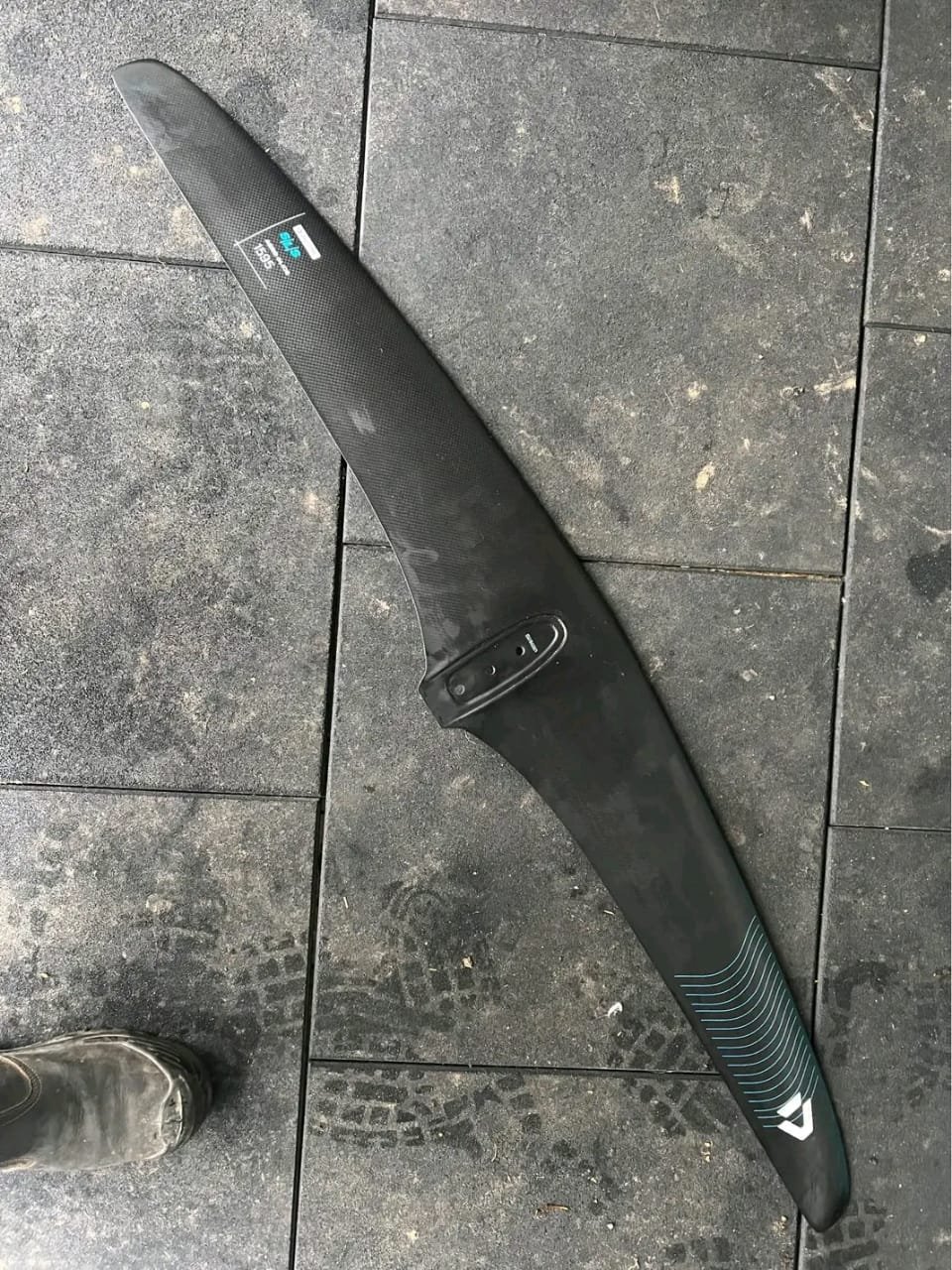
DUOTONE Glide 1305 Wing
€150.00
Description
DUOTONE Glide 1305 Wing
Glide defines distance. Lift shapes stability. Efficiency transforms every session
The DUOTONE Glide 1305 Wing delivers powerful early lift, extended glide retention, and controlled carving dynamics for riders who demand maximum low-end performance without sacrificing efficiency. Engineered by Duotone, this high-aspect front wing blends surface area with hydrodynamic refinement to create a foil that excels in light wind, downwind linking, and progressive freeride sessions.
Because foil choice directly determines how early you lift, how far you glide, and how confidently you carve, selecting the right front wing becomes critical. Therefore, this hybrid SEO product description explores design geometry, performance behavior, rider compatibility, modular integration, and long-term ownership value—centered around the keyphrase DUOTONE Glide 1305 Wing.
Why Choose the DUOTONE Glide 1305 Wing?
Light wind challenges consistency. Surface area determines lift. High-aspect geometry preserves speed.
The 1305 cm² surface area offers significant lift potential while maintaining glide efficiency. Consequently, riders achieve earlier takeoff and sustained flight even in marginal conditions. Moreover, the refined aspect ratio reduces drag compared to traditional large low-aspect wings.
Because lift builds progressively rather than abruptly, stability improves during takeoff and pumping phases.
Key Highlights at a Glance
Performance Overview
-
Surface Area: 1305 cm²
-
High-Aspect Design: Enhanced glide efficiency

-
Optimized Low-End Lift
-
Stable Pitch Control
-
Smooth Carving Response
-
Efficient Pumping Projection
-
Carbon Construction
-
Modular Aero System Compatibility
-
Inclusive Light-Wind Accessibility
Hydrodynamic Engineering
High-Aspect Efficiency
Large surface area often increases drag. However, the DUOTONE Glide 1305 Wing integrates a refined span and chord distribution to minimize resistance.
As a result:
-
Glide extends between pumps
-
Forward projection improves
-
Speed retention increases
Additionally, the thin profile maintains clean laminar flow across the wing surface.
Lift Curve & Stability
Early lift supports beginner progression. Controlled lift supports advanced carving.
Because the 1305 features balanced lift distribution from root to tip:
-
Takeoffs feel stable
-
Pitch oscillation reduces
-
Speed scaling remains predictable
Consequently, riders maintain control even as wind increases.
On-Water Performance Analysis
Early Takeoff & Low-Wind Mastery
Marginal wind sessions demand efficient energy conversion.
The DUOTONE Glide 1305 Wing delivers:
-
Rapid foil engagement
-
Reduced pumping effort
-
Stable vertical lift
Therefore, lighter riders experience earlier flight, while heavier riders gain necessary surface area support.
Glide Retention & Downwind Linking
Momentum determines efficiency.
Because high-aspect geometry reduces induced drag:
-
Glide distance extends
-
Pump frequency decreases
-
Swell linking becomes smoother
Moreover, downwind sessions benefit from sustained projection rather than abrupt stall.
Carving & Rail-to-Rail Control
Large wings often feel sluggish. However, the DUOTONE Glide 1305 Wing maintains responsive roll initiation due to optimized span distribution.
Consequently:
-
Turn arcs remain smooth
-
Lean angles feel supported
-
Exit acceleration stays controlled
Additionally, torsional rigidity preserves shape during high-load carves.
Construction & Material Technology
Carbon Structure
Carbon construction enhances stiffness-to-weight ratio.
Because torsional rigidity minimizes flex:
-
Pitch stability improves
-
Steering response sharpens
-
Long-term structural integrity increases
Reinforced leading-edge layering protects high-load zones.
Rider Compatibility & Application
Beginners
Stable early lift accelerates learning curve.
Intermediate Riders
Efficient glide enhances pumping confidence and carving progression.
Advanced Downwind Riders
Extended glide supports long-distance linking.
Inclusive Performance Philosophy
Foiling welcomes diverse riders across sizes, strengths, and goals. The DUOTONE Glide 1305 Wing accommodates varied rider weights and disciplines through adaptable lift characteristics.
Ideal Conditions & Use Cases
Light-Wind Wing Foiling
Large surface area maximizes takeoff potential.
Downwind Sessions
High-aspect efficiency supports long bump linking.
Freeride Exploration
Balanced lift enables stable cruising.
Because versatility increases real-world value, this wing adapts across environments.
Modular System Integration
The DUOTONE Glide 1305 Wing integrates seamlessly with Duotone’s Aero modular mast and fuselage systems.
Benefits include:
-
Secure mounting precision
-
Balanced load transfer
-
Customizable performance tuning
Therefore, riders configure foil setups according to discipline and preference.
Rider Weight Scaling
Lighter Riders (55–70kg)
-
Early lift engagement
-
Efficient low-wind cruising
Mid-Weight Riders (70–85kg)
-
Stable takeoff in marginal wind
-
Balanced carving performance
Heavier Riders (85kg+)
-
Reliable lift in lighter wind bands
-
Improved downwind efficiency
Because lift scales proportionally with rider weight and wind strength, the 1305 serves as a dependable low-wind solution.
Durability & Long-Term Value
Premium carbon materials preserve structural integrity across seasons.
Consequently:
-
Performance consistency remains high
-
Flex fatigue minimizes
-
Resale value retains strength
Because structural precision directly affects glide efficiency, durability matters long term.
Buyer Decision Drivers
Riders searching for DUOTONE Glide 1305 Wing typically prioritize:
-
Maximum low-end lift
-
High-aspect glide efficiency
-
Stable pitch control
-
Carbon structural durability
-
Downwind compatibility
Because this wing addresses each factor directly, purchasing confidence increases.
DUOTONE Glide 1305 Wing
Design DNA, Hydrodynamic Geometry & Core Performance Philosophy
Lift changes everything. Glide defines possibility. Surface area unlocks new wind ranges.
The DUOTONE Glide 1305 Wing establishes itself as a light-wind and downwind performance solution built for riders who prioritize early takeoff, sustained glide, and balanced stability. Developed by Duotone, this high-aspect front wing integrates generous surface area with refined profile engineering to maximize efficiency without sacrificing carving control.
Because foil choice determines how early you rise and how long you stay flying, understanding the foundation behind the DUOTONE Glide 1305 Wing becomes essential.
The Concept Behind the Glide 1305
Surface area creates lift. Aspect ratio preserves glide. Profile refinement maintains control.
At 1305 cm², this wing targets riders who want:
-
Earlier takeoff in marginal wind
-
Extended glide between pumps
-
Reliable pitch stability
-
Downwind linking capability
However, unlike traditional large low-aspect wings that feel slow or drag-heavy, the Glide 1305 integrates a high-aspect outline to reduce induced drag. Consequently, riders experience smooth acceleration rather than sluggish lift behavior.
Hydrodynamic Geometry Explained
High-Aspect Efficiency with Large Surface Area
Large wings often compromise speed. High-aspect wings prioritize glide. The DUOTONE Glide 1305 Wing merges both principles.
Because span distribution extends efficiently across the foil:
-
Lift builds progressively
-
Glide retention improves
-
Drag remains controlled
Additionally, the refined foil section supports clean laminar flow, which enhances projection through lulls.
Lift Curve & Stability Profile
Abrupt lift spikes destabilize stance. Balanced lift curves improve control.
The Glide 1305 features distributed lift from root to tip. Therefore:
-
Takeoffs feel smooth
-
Pitch oscillation reduces
-
Front-foot pressure remains manageable
Moreover, the wing sustains lift across varied speeds, which supports pumping rhythm consistency.
Early Takeoff Advantage
Marginal wind limits session duration. Efficient foil lift expands opportunity.
With 1305 cm² of surface area, riders gain:
-
Rapid foil engagement
-
Reduced pumping intensity
-
Stable initial ascent
Because lift engages early, lighter riders extend water time while heavier riders achieve necessary support in lower wind bands.
Structural Engineering & Carbon Construction
Carbon Stiffness & Shape Retention
Flex distorts hydrodynamic profiles. Carbon reinforcement preserves geometry.
The DUOTONE Glide 1305 Wing utilizes precision carbon layering to ensure torsional rigidity under load. Consequently:
-
Carving accuracy improves
-
Speed stability increases
-
Structural fatigue minimizes
Additionally, reinforced load zones protect high-stress areas during aggressive carving.
Who Is the Glide 1305 Designed For?
Light-Wind Enthusiasts
Riders seeking maximum session frequency benefit from early lift engagement.
Downwind Explorers
Extended glide efficiency enhances bump linking and distance travel.
Progressing Wing Foilers
Stable lift curves accelerate learning without overwhelming pitch sensitivity.
Inclusive Rider Design
Foiling welcomes diverse body types and progression paths. The DUOTONE Glide 1305 Wing accommodates varied rider weights through scalable lift characteristics.
Performance Characteristics Snapshot
DUOTONE Glide 1305 Wing Highlights
-
1305 cm² high-aspect surface area
-
Early lift activation
-
Efficient glide retention
-
Stable pitch control
-
Carbon structural stiffness
-
Downwind-compatible geometry
-
Modular Aero system integration
-
Inclusive performance scaling
Why 1305 cm² Matters
Smaller wings require more wind. Larger wings provide lift but often sacrifice glide.
The 1305 size balances:
-
Light-wind accessibility
-
High-aspect efficiency
-
Controlled carving response
Because versatility increases real-world usability, this surface area becomes a strategic addition to any foil quiver.
Foundation for Multi-Discipline Use
The DUOTONE Glide 1305 Wing performs effectively across:
-
Wing foiling
-
Downwind riding
-
Freeride cruising
-
Learning progression setups
Therefore, riders invest in adaptability rather than single-condition specialization.
DUOTONE Glide 1305 Wing
On-Water Dynamics, Pumping Efficiency & Performance Scaling
Momentum rewards efficiency. Timing refines glide. Stability sustains progression.
The DUOTONE Glide 1305 Wing truly demonstrates its value once it engages with real water flow. While Part 1 covered design philosophy and structural engineering, this section focuses on dynamic lift behavior, pumping efficiency, carving mechanics, wind scaling, and rider-weight optimization.
Because large high-aspect wings require careful balance between lift and control, understanding real-world performance characteristics becomes essential.
Early Lift & Takeoff Mechanics
Rapid Engagement in Marginal Wind
Light wind often limits foil sessions. However, the DUOTONE Glide 1305 Wing activates lift earlier than smaller surface-area wings.
When initiating takeoff:
-
Lift builds progressively
-
Front-foot pressure remains manageable
-
Foil rise feels stable
Consequently, riders achieve flight without aggressive pumping sequences.
Additionally, distributed lift across the span minimizes abrupt pitch spikes during early ascent.
Pumping Efficiency & Energy Transfer
Forward Projection Advantage
Efficient pumping converts vertical motion into forward glide. The Glide 1305’s high-aspect geometry optimizes this transfer.
Because drag remains controlled despite large surface area:
-
Glide distance extends between pumps
-
Rider fatigue reduces
-
Rhythm stabilizes
Moreover, consistent lift output maintains forward momentum during swell linking.
Downwind Linking Performance
Downwind sessions demand sustained projection.
With the DUOTONE Glide 1305 Wing:
-
Energy retention improves across micro-bumps
-
Transition between swells feels smooth
-
Pump frequency decreases
Therefore, riders maintain extended glide without abrupt stall points.
Carving & Roll Response
Lean Angle & Turn Control
Large wings often resist quick roll initiation. However, refined span distribution enhances maneuverability.
During carving:
-
Roll engagement feels deliberate
-
Turn arcs remain smooth
-
Speed retention persists mid-turn
Additionally, torsional stiffness preserves profile integrity under load.
Exit Acceleration
Carving efficiency depends on clean exit projection.
Because lift remains evenly distributed:
-
Speed rebuilds smoothly
-
Nose rise stays controlled
-
Balance correction reduces
Consequently, carving sequences feel fluid rather than segmented.
Wind Range Scaling & Rider Weight Analysis
Lighter Riders (55–70 kg)
-
Exceptional early lift
-
Efficient cruising in marginal wind
-
Reduced pumping intensity
Mid-Weight Riders (70–85 kg)
-
Balanced lift-to-speed ratio
-
Reliable takeoff in 10–18 knots (depending on setup)
-
Stable carving response
Heavier Riders (85 kg+)
-
Strong support in low wind
-
Enhanced downwind glide retention
-
Reduced stall sensitivity
Because lift scales proportionally with surface area, the 1305 accommodates a broad rider spectrum.
Stability & Pitch Control Under Load
Controlled Vertical Behavior
Large front wings risk pitch oscillation if poorly tuned.
However, the DUOTONE Glide 1305 Wing maintains stable lift distribution, which reduces:
-
Nose oscillation
-
Over-foiling tendencies
-
Sudden lift surges
Therefore, riders maintain balanced stance throughout acceleration.
Real-World Riding Scenarios
Light-Wind Wing Foiling
Early takeoff extends water time even when wind remains inconsistent.
Coastal Chop
Stable pitch control supports smooth glide across turbulent surfaces.
Long-Distance Downwind
High-aspect efficiency sustains forward projection with minimal energy loss.
Because adaptability enhances usability, the DUOTONE Glide 1305 Wing performs consistently across environments.
System Integration Considerations
Mast Pairing
Stiffer carbon masts maximize projection efficiency.
Stabilizer Selection
Medium stabilizers balance pitch stability and maneuverability.
Fuselage Length
Longer fuselages enhance pitch dampening for downwind setups.
Therefore, system tuning optimizes wing performance for discipline-specific needs.
Performance Strength Recap
The DUOTONE Glide 1305 Wing delivers:
-
Early lift in marginal wind
-
Extended glide retention
-
Efficient pumping projection
-
Stable pitch control
-
Controlled carving dynamics
-
Broad rider compatibilit
DUOTONE Glide 1305 Wing
Competitive Positioning, Quiver Strategy & Long-Term Value
Performance expands with surface area. Efficiency scales with design. Confidence grows from consistency.
The DUOTONE Glide 1305 Wing, engineered by Duotone, occupies a strategic position in the light-wind and downwind foil category. While Parts 1 and 2 detailed hydrodynamic geometry and on-water behavior, this section focuses on competitive differentiation, quiver integration, durability economics, and high-conversion buying drivers.
Because riders investing in a 1300+ cm² wing typically seek maximum lift efficiency without sacrificing glide, clarity around value becomes essential.
Competitive Positioning in the 1300 cm² Category
High-Aspect vs. Traditional Large Wings
Traditional large front wings deliver strong lift but often introduce drag and sluggish handling.
In contrast, the DUOTONE Glide 1305 Wing integrates:
-
High-aspect span efficiency
-
Reduced induced drag
-
Smoother acceleration curves
-
Improved glide retention
Consequently, riders gain early lift without sacrificing forward projection.
Compared to Smaller Glide Models
Smaller high-aspect wings increase speed and maneuverability. However, they require more wind and more precise pumping.
The 1305 version provides:
-
Earlier takeoff window
-
Lower stall speed
-
Greater low-end security
Therefore, it becomes the logical choice for riders prioritizing session frequency in marginal wind.
Strategic Quiver Integration
As a Light-Wind Anchor Wing
For many riders, the DUOTONE Glide 1305 Wing functions as the low-end foundation of a balanced foil quiver.
Typical progression setup:
-
1305 for light wind & downwind
-
1000–1100 range for moderate wind
-
800–900 for higher wind speed sessions
Because each size maintains consistent Glide-series handling characteristics, muscle memory transfers smoothly between wings.
Rider Weight & Quiver Logic
Lighter Riders (55–70 kg)
-
1305 serves as ultra-light wind solution
-
Smaller wings cover mid-range wind
Mid-Weight Riders (70–85 kg)
-
1305 becomes primary light-wind driver
-
Mid-size wing covers daily freeride
Heavier Riders (85 kg+)
-
1305 provides essential low-end lift
-
Mid-size wing handles stronger wind
Therefore, the 1305 strengthens overall quiver flexibility.
Long-Term Durability & Structural Integrity
Carbon Rigidity & Shape Retention
Carbon construction ensures torsional stiffness and profile preservation.
As a result:
-
Flex-induced distortion minimizes
-
Hydrodynamic efficiency remains stable
-
Long-term performance consistency improves
Because front wing shape directly affects lift behavior, structural retention protects long-term value.
Ownership Economics
Investing in premium foil components requires evaluating lifecycle cost.
The DUOTONE Glide 1305 Wing delivers:
-
Multi-discipline compatibility
-
Strong resale potential
-
Durable carbon construction
-
Long-term hydrodynamic consistency
Consequently, value extends beyond seasonal usage.
Buyer Decision Drivers
Riders searching for DUOTONE Glide 1305 Wing typically prioritize:
-
Maximum early lift in light wind
-
High-aspect glide efficiency
-
Stable pitch control
-
Carbon durability
-
Downwind capability
Because the 1305 addresses these criteria directly, purchasing confidence increases.
Environmental Adaptability
Light-Wind Flatwater
Early lift maximizes marginal conditions.
Coastal Chop
Stable pitch alignment supports smooth glide through turbulence.
Downwind & Swell Linking
Extended glide retention enhances flow between bumps.
Because versatility increases real-world usability, this wing performs consistently across diverse environments.
Inclusive Performance Philosophy
Foiling attracts riders with varied ambitions and physical profiles. The DUOTONE Glide 1305 Wing supports inclusive progression through scalable lift and predictable stability.
Consequently, beginners gain confidence while advanced riders refine efficiency and endurance.
Performance Recap Summary
The DUOTONE Glide 1305 Wing offers:
-
1305 cm² high-aspect efficiency
-
Early lift activation
-
Extended glide retention
-
Controlled carving response
-
Stable pitch alignment
-
Durable carbon construction
-
Modular Aero compatibility
Through refined geometry and structural precision, this wing expands the lower wind range without compromising performance.
DUOTONE Glide 1305 Wing
Advanced Tuning, Performance Optimization & Final Conversion Drivers
Efficiency rewards precision. Surface area magnifies opportunity. Fine-tuning unlocks full potential.
The DUOTONE Glide 1305 Wing, developed by Duotone, performs at its highest level when integrated into a well-balanced foil system and tuned intentionally. While Parts 1–3 covered geometry, hydrodynamics, and competitive positioning, this final section focuses on advanced setup optimization, rider progression psychology, micro-adjustment strategies, and high-conversion buying reinforcement.
Because large high-aspect wings amplify both lift and feedback, small setup adjustments produce measurable gains.
Advanced Setup Optimization
Mast Positioning on the Board
Mast track placement significantly influences lift behavior.
-
Moving the mast forward increases early lift and front-foot engagement.
-
Shifting the mast rearward improves high-speed stability and reduces front-foot pressure.
Therefore, riders adjust trim depending on wind strength and pumping intensity.
Stabilizer Selection & Angle Tuning
Rear stabilizer size and shim angle directly affect pitch stability.
-
Larger stabilizers increase control and forgiveness.
-
Smaller stabilizers enhance glide speed and maneuverability.
Because the DUOTONE Glide 1305 Wing generates strong lift, pairing with a balanced stabilizer preserves pitch control without sacrificing projection.
Fuselage Length Considerations
Longer fuselages dampen pitch oscillation. Shorter fuselages improve agility.
For downwind setups, a slightly longer fuselage enhances stability. For freeride carving, mid-length configurations maintain responsiveness.
Consequently, the 1305 adapts to multiple riding styles through modular tuning.
Micro-Performance Gains
Pumping Efficiency Refinement
Large surface area supports energy retention. However, proper technique maximizes benefit.
With the DUOTONE Glide 1305 Wing:
-
Subtle weight shifts replace aggressive pumping
-
Glide intervals extend naturally
-
Rhythm becomes smoother
Because drag remains controlled, forward projection improves with minimal additional effort.
Carving Depth & Lean Confidence
Height and clearance define carve depth.
When paired with a 90cm mast or similar setup:
-
Lean angles increase safely
-
Turn radius tightens predictably
-
Exit acceleration remains smooth
Therefore, riders carve deeper without risking ventilation or stall.
Performance Psychology & Rider Confidence
Confidence emerges from predictability. Predictability develops through stability.
The DUOTONE Glide 1305 Wing provides:
-
Progressive lift onset
-
Balanced pitch behavior
-
Smooth speed scaling
As a result, riders trust the foil during marginal wind and longer downwind lines. That trust accelerates progression and extends session duration.
Environmental Performance Scaling
Ultra-Light Wind Sessions
Surface area maximizes available energy.
Rolling Swell & Downwind
High-aspect efficiency sustains linking between bumps.
Coastal Chop
Stable lift distribution maintains balance during turbulence.
Because adaptability increases value, the 1305 remains reliable across diverse water states.
Long-Term Maintenance & Care
Carbon performance benefits from proper care.
Recommended practices include:
-
Rinsing thoroughly after salt exposure
-
Inspecting mounting surfaces for debris
-
Tightening bolts to specified torque
-
Storing in padded foil protection
Therefore, hydrodynamic precision remains intact over time.
Investment Confidence Factors
Riders considering the DUOTONE Glide 1305 Wing often evaluate:
-
Early lift reliability
-
Glide efficiency in marginal wind
-
Carbon structural durability
-
Modular compatibility
-
Long-term resale value
Because this wing satisfies each factor directly, purchasing confidence increases.
Reinforcement
The DUOTONE Glide 1305 Wing delivers:
-
1305 cm² high-aspect lift efficiency
-
Early takeoff performance
-
Extended glide retention
-
Controlled pitch stability
-
Responsive carving dynamics
-
Carbon durability and structural retention
-
Modular Aero system integration
Through refined hydrodynamics and precision carbon engineering, this wing expands light-wind capability while preserving glide efficiency.

Reviews
There are no reviews yet.